

 Tiếng Việt
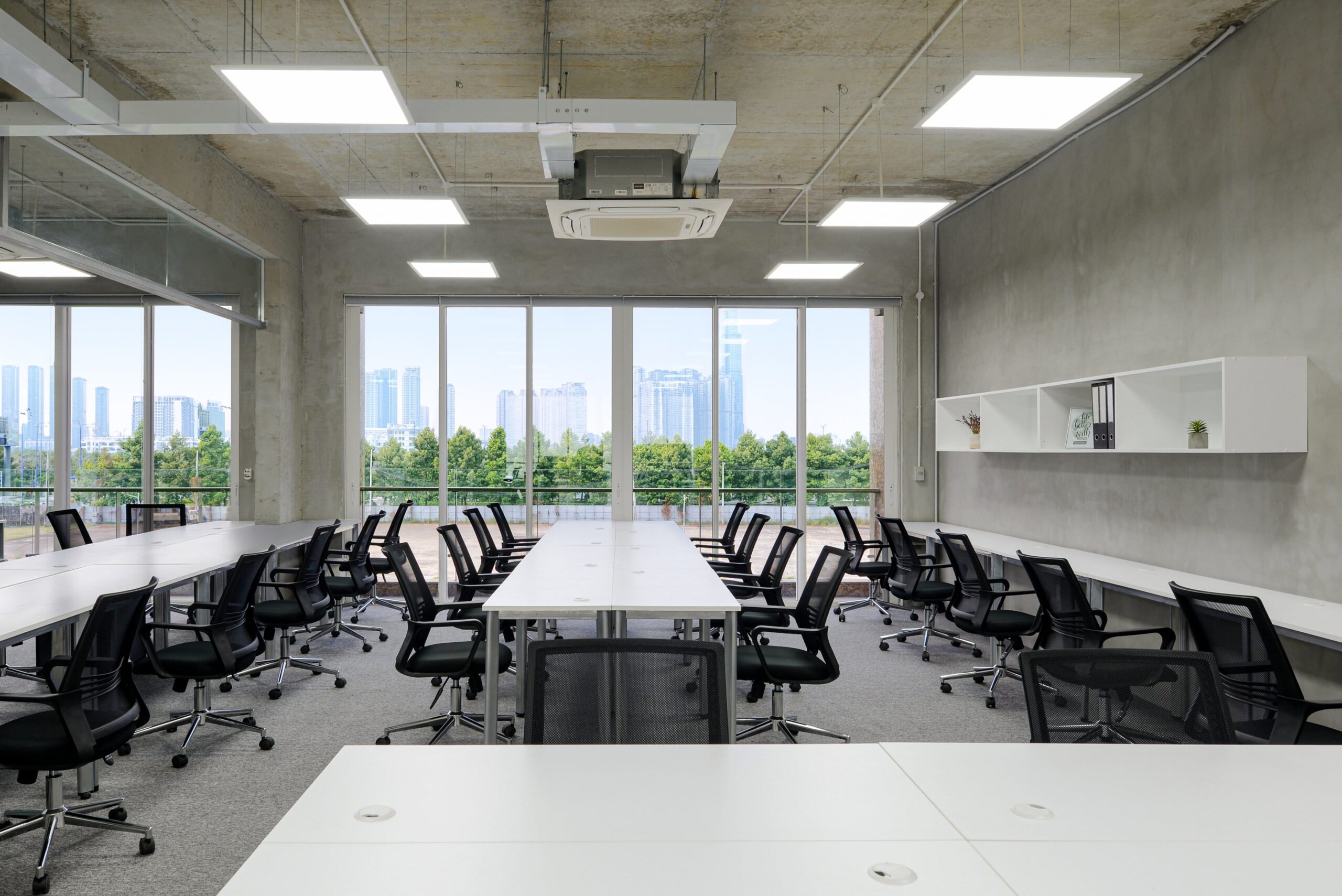
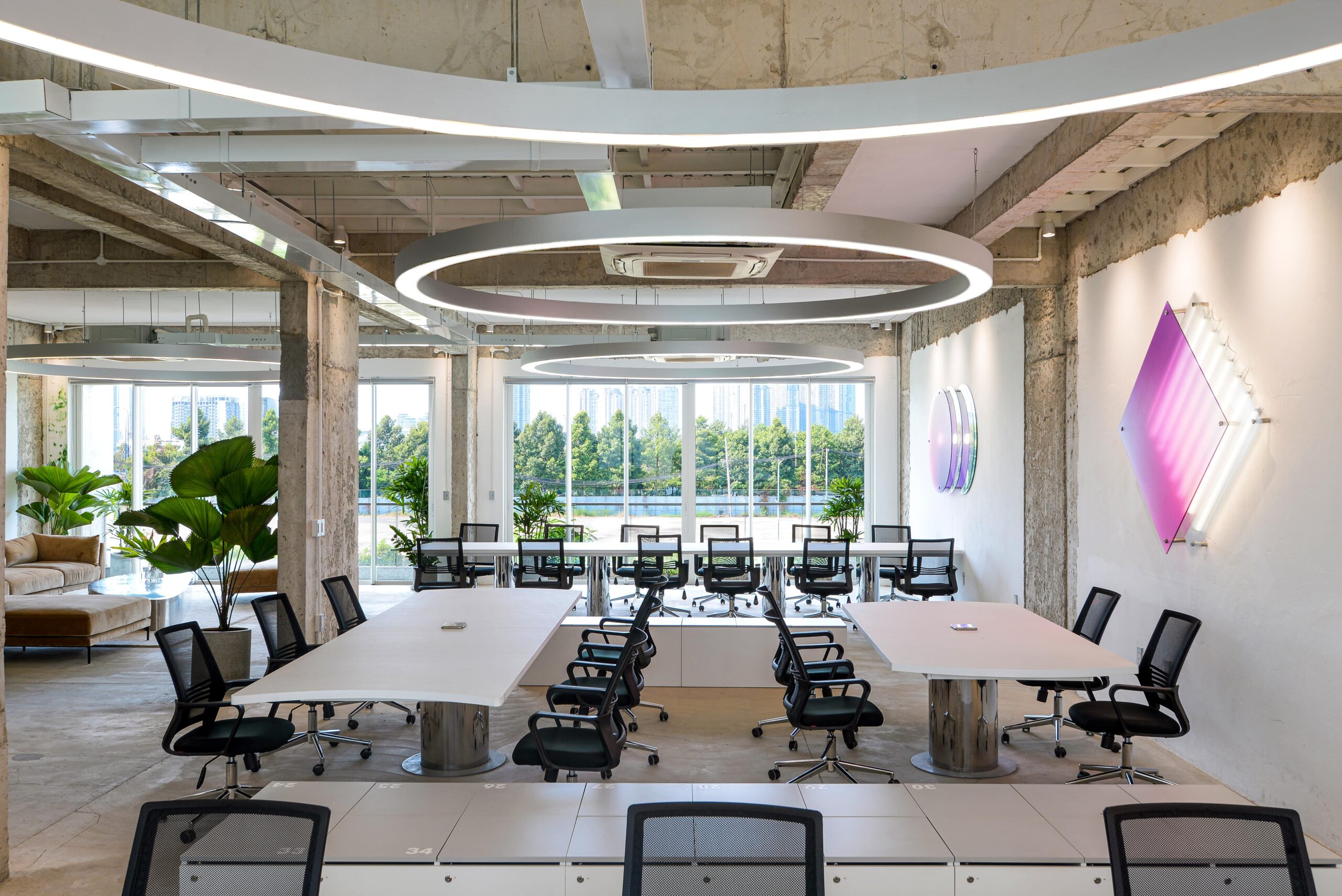
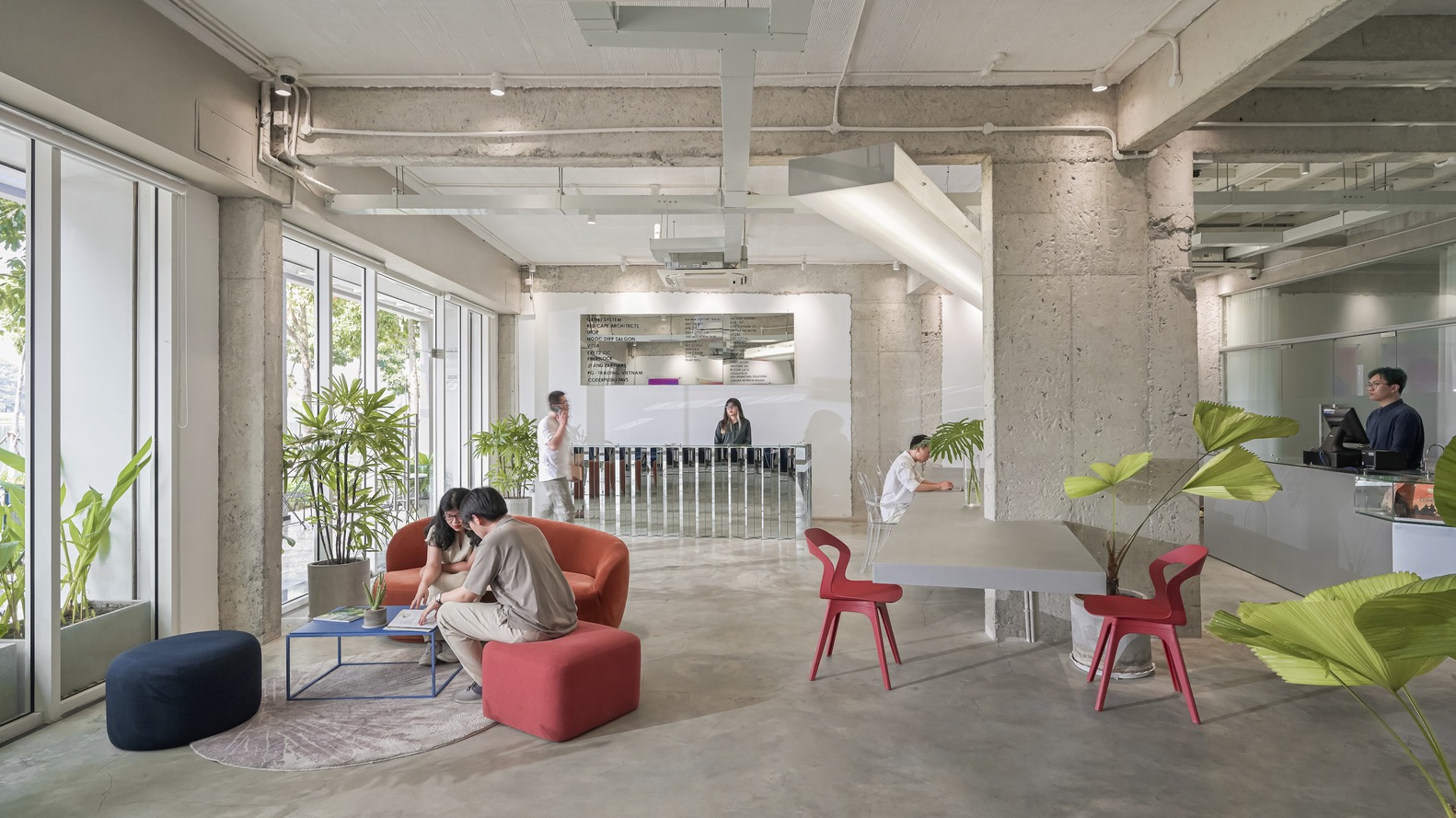
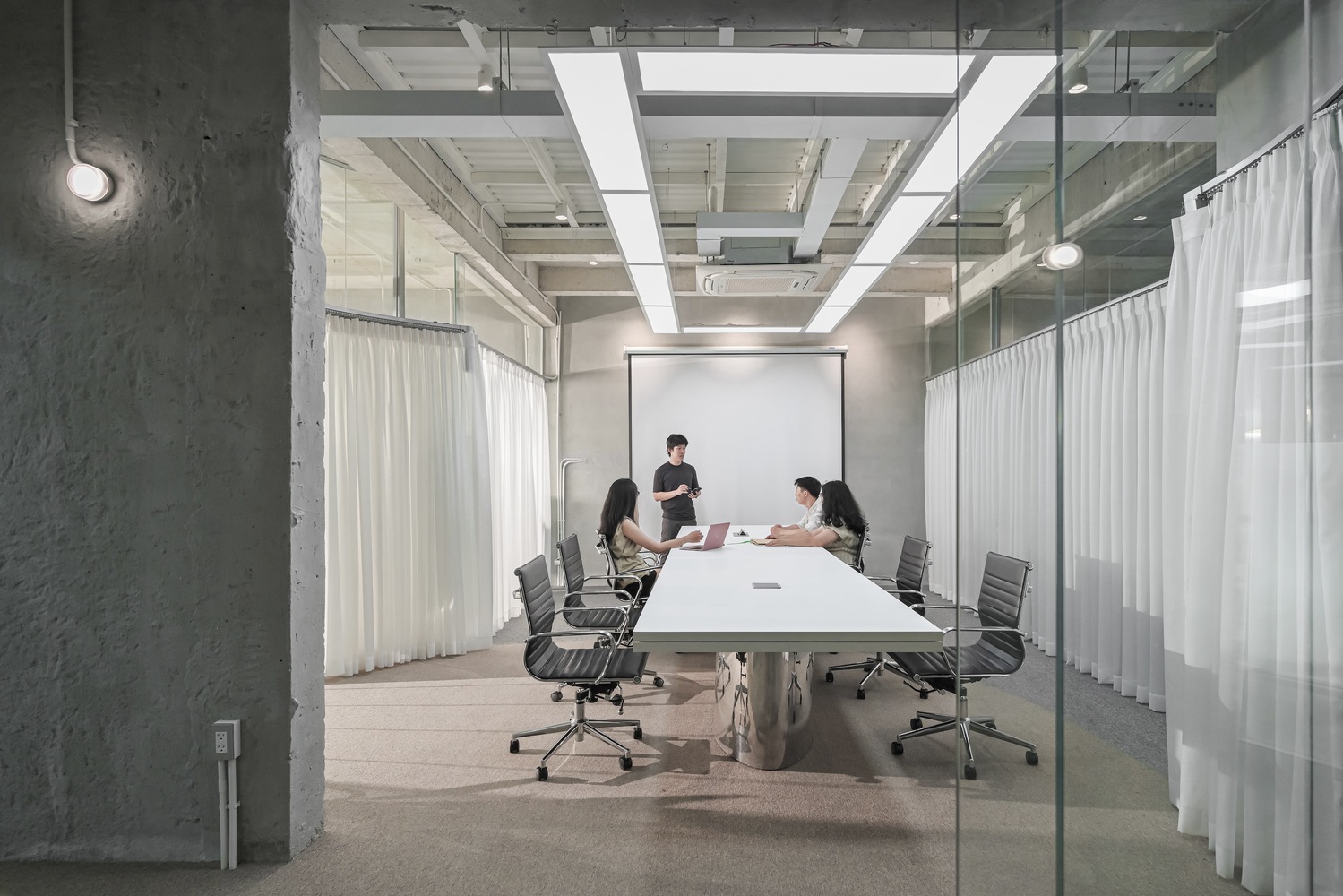
WELL certification is becoming a leading global standard for health, safety and human experience in built spaces, especially in modern offices. In this article, Inspire Hub gives an overview of the concept and the 10 WELL building standards so companies can plan a suitable office strategy.
What is WELL certified?
WELL certified is an international building standard that focuses on the physical and mental health of occupants, created and managed by the International WELL Building Institute IWBI. Launched in October 2014, the WELL Building Standard is known as the first certification system in the world that directly targets health and wellness in the built environment.
WELL v1 was the first version with seven core concept groups. In 2018, IWBI released the WELL v2 pilot as an upgrade based on research and market feedback. In 2020, WELL v2 became the official version worldwide, and IWBI closed new registrations for WELL v1 and WELL v2 pilot projects at the end of that year.
Business benefits of a WELL certified office
Below are key benefits for companies when their offices achieve WELL certification:
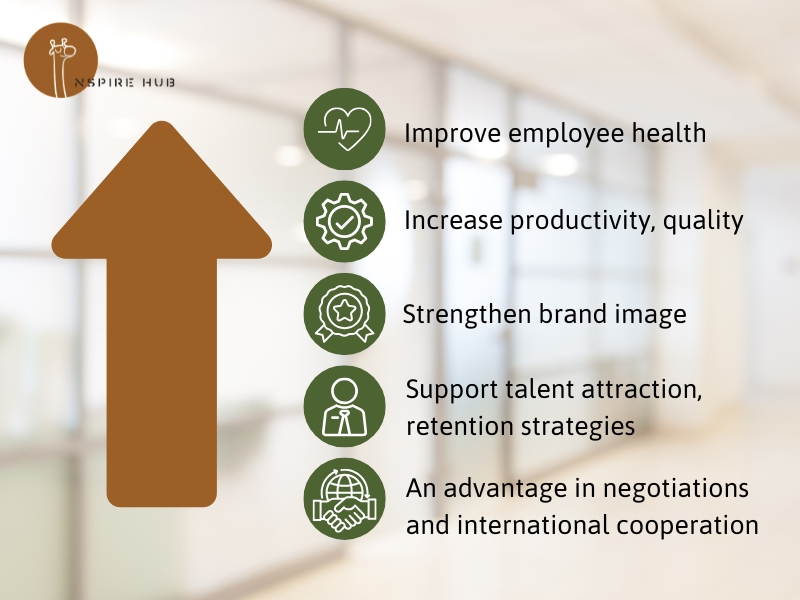
- Improve employee health and engagement through a workplace designed using scientific data about human health.
- Increase productivity, decision quality and focus thanks to workspace that optimizes light, sound, temperature and indoor air quality.
- Strengthen brand image as a company that cares about people and the community, which is especially useful for technology firms, architecture studios, investment firms and funds.
- Support talent attraction and retention strategies by showing a long-term commitment to employee wellbeing and work experience.
- Create advantages in negotiations and international partnerships where global operating standards such as WELL, LEED and BREEAM are highly valued.
What are the 10 WELL building standards?
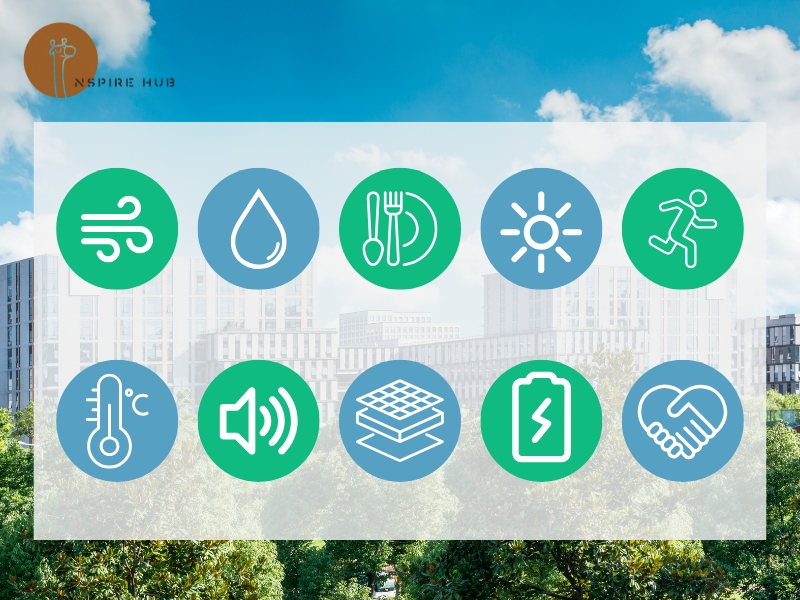
The WELL Building Standard v2 groups requirements into ten concepts that cover the main factors with direct impact on health, safety and experience in the workplace:
Air
Indoor air quality is a basic element of a healthy workplace because most working hours are spent in enclosed, air-conditioned environments. Research published in the International Journal of Environmental Research and Public Health in 2021 showed that when PM2.5 levels increase by 10 mcg per cubic meter, work performance drops by 1 percent, and if satisfaction with air quality falls by 10 percent, performance decreases by another 1.1 percent. Therefore, WELL air standards focus on controlling indoor air quality and reducing pollutants such as PM2.5, volatile organic compounds VOC, carbon dioxide and common allergens.
Water
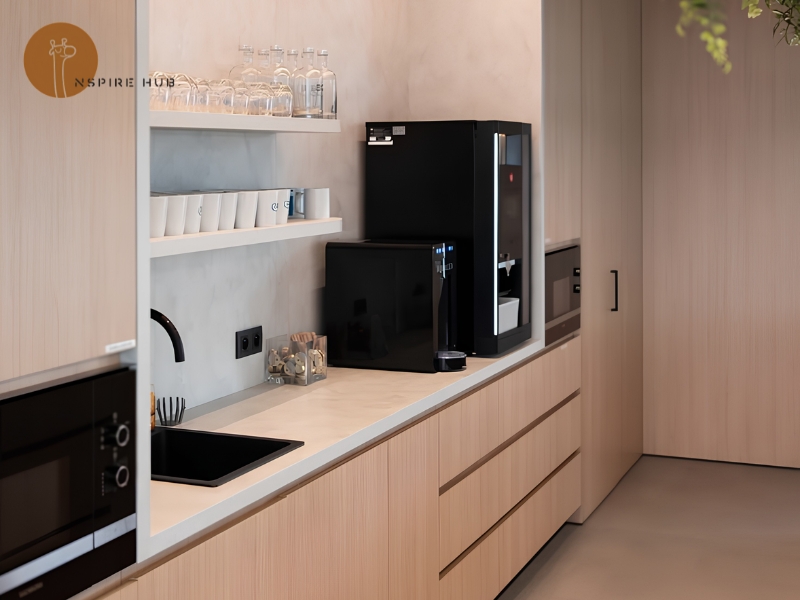
This concept covers control of potable water and domestic water quality to ensure safe and easy access to water for employees in all working areas. Offices that follow WELL often need regular water testing to keep microbiological, heavy metal and other harmful substances within the limits of the standard. A Waterlogic study in 2020 found that adding enough water points helped employees increase their daily water intake from 1,150 milliliters to 2,198 milliliters, and 93 percent of participants reported better focus and performance.
Nourishment
Eating habits in the workplace also affect employee health, especially for people who have lunch and snacks at the office. The nourishment concept encourages companies to support healthy eating by designing the offices pantry, setting food policies and being transparent about nutrition information for food and drinks.
Light
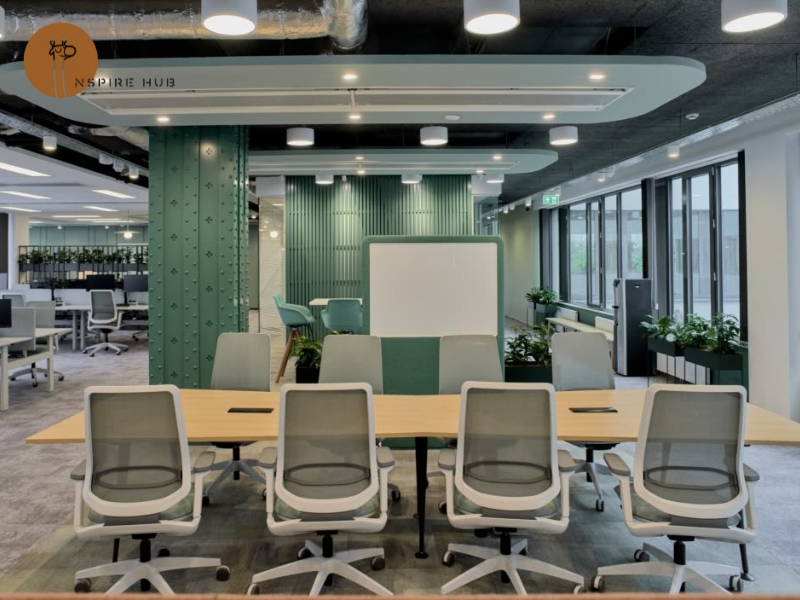
Natural and artificial light directly affect vision, sleep and the circadian rhythm of people. To reduce eye strain, stress and improve focus at work, the WELL light concept looks at illuminance levels, color temperature, layout of lighting fixtures, use of daylight and the ability to adjust lighting by area.
Movement
Daily physical activity levels depend strongly on space planning and internal policies of the company. The movement concept in WELL recommends easy-to-access stairs, clear circulation paths, sit-stand desks and chances for light physical activity during work hours.
A study in BMC Public Health in 2024 reported that office workers spend more than 553 minutes per day in sedentary positions, equal to about 71 percent of their time, which is two to three hours higher than other occupations. Because of this, office design should encourage regular movement to improve physical health and support metabolic activity.
Thermal comfort
Temperature, humidity, and airspeed define thermal comfort and directly impact employee focus. Offices that achieve WELL certification can limit sudden changes in temperature that cause fatigue by using sensors and zoning controls for heating, ventilation and air conditioning systems.
Sound
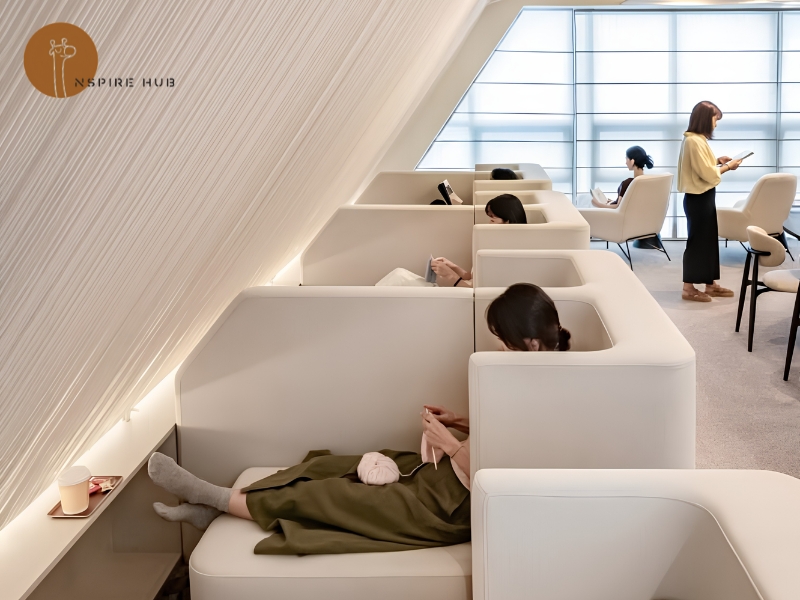
In addition to speech, workplace sound includes noise from equipment, mechanical systems and echoes from the building structure. Long-term exposure to high noise levels can reduce concentration and cause mental fatigue. The sound concept recommends the use of sound-absorbing materials and the separation of quiet zones from open areas to reduce noise for tasks that require high concentration.
Materials
The composition and origin of construction and interior materials can influence employee health. WELL requires companies to control materials that may emit volatile organic compounds, allergens or toxic substances to reduce chemical exposure during work and create a cleaner indoor environment.
Mind
Mental health plays a central role in overall employee wellbeing. A World Health Organization WHO report in 2022 showed that organizations that implement holistic space design and mental health policies can see work performance increase by about 12 percent. The mind concept covers human resources policies and corporate culture that support positive mental states, including rest areas, greenery, psychological support programs and work-life balance activities. Creating a green office space is one of the most effective ways to foster this mental wellness and productivity.
Community
This concept evaluates social inclusion in the workplace and fairness in human resources policies. Corporate social responsibility programs, equal access for people with disabilities, team building activities and open feedback channels are all part of the community concept in WELL.
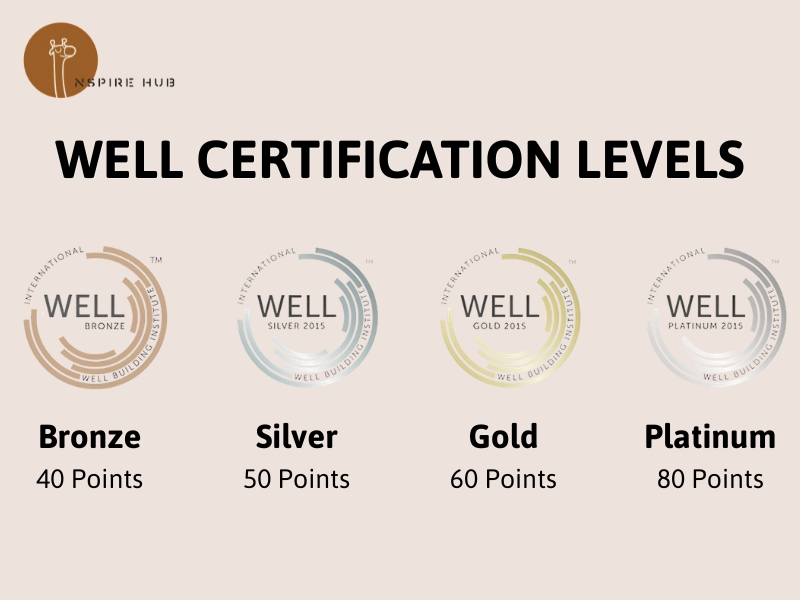
WELL certification levels in WELL v2
In WELL v2, certification is awarded at four levels based on minimum points, preconditions and the number of optimization features achieved:
- WELL Core Bronze 40 points: For core and shell projects that want to set a basic health foundation for tenants.
- WELL Core Silver 50 points: Meets core preconditions and a solid number of optimization points, suitable for offices that aim for enhanced quality.
- WELL Core Gold 60 points: Often chosen by international corporations to create a strong brand and employee experience.
- WELL Core Platinum 80 points: The highest level with integrated design, operations and policies, usually seen in landmark buildings or headquarters.
Registration and certification process for WELL
For developers, real estate funds and representative offices, a clear view of the WELL certification process helps with budget planning and timeline management. The main steps are:
- Define project goals, project type and the suitable WELL certification system.
- Use the WELL scoring sheet to select preconditions and optimization features and build a points strategy.
- Register the project on the WELL Online platform of the International WELL Building Institute.
- Work with a WELL Accredited Professional or a consulting firm to integrate WELL requirements into design, construction and operations.
- When the building is in use, a WELL performance testing agent measures performance, scores the project, issues the certificate and guides regular recertification.
Frequently asked questions about WELL certification
What project types can use WELL?
WELL certification can be applied to many types of real estate such as office towers, mixed use commercial complexes, schools, hospitals and multifamily residential buildings. Depending on the share of leased area, owners can choose standard WELL Certification or WELL Core for core and shell projects.
How does WELL compare with other building certifications?
Besides WELL, other certification systems such as LEED, BREEAM and LOTUS also assess green and sustainable offices:
| Criteria | WELL | LEED | BREEAM | LOTUS |
| Focus | Health, mental wellbeing, user experience | Environment, energy, water, materials, site | Environmental sustainability of the asset | Green buildings adapted to Vietnam, balance of energy, water, materials, health, location and management |
| Assessment method | More focus on actual performance and on-site testing | Mainly based on points and project documentation | Wide assessment of environment and building life cycle | Includes prerequisites and grouped criteria, based on environmental performance and local conditions |
| Cost | Often higher than LOTUS and more accessible systems | Depends on project type and certification system | Depends on region and project size | Often seen as more suitable for the Vietnamese market because it is designed for local conditions |
Is WELL certification expensive?
WELL certification costs include registration fees, fees based on floor area and fees for on-site performance testing, depending on project size. Although upfront capital costs may be higher due to technical requirements, companies can recover them over time through long-term benefits in productivity, employee health and employer brand.
Can a renovated office obtain WELL certification?
Renovated offices can still achieve WELL certification when they meet basic conditions and design requirements. Using the WELL framework, many projects gradually upgrade systems such as air, water and light, as well as wellbeing policies, to reach higher certification levels.
In short, WELL certification is a standard framework that helps companies redefine the office as a foundation for sustainable health and performance for global teams. Contact Inspire Hub for advice on flexible workspaces that align with the growth strategy of foreign-invested companies.